EV Drivetrain
Magnetic control IP for future traction and drivetrain evaluation
FluxWorx is not currently offering an operating EV drivetrain product. We are seeking expressions of interest from vehicle OEMs, Tier 1 suppliers, traction inverter teams, and research partners interested in evaluating International Patent Pending Differential Flux Steering technology for future electric drivetrain systems.
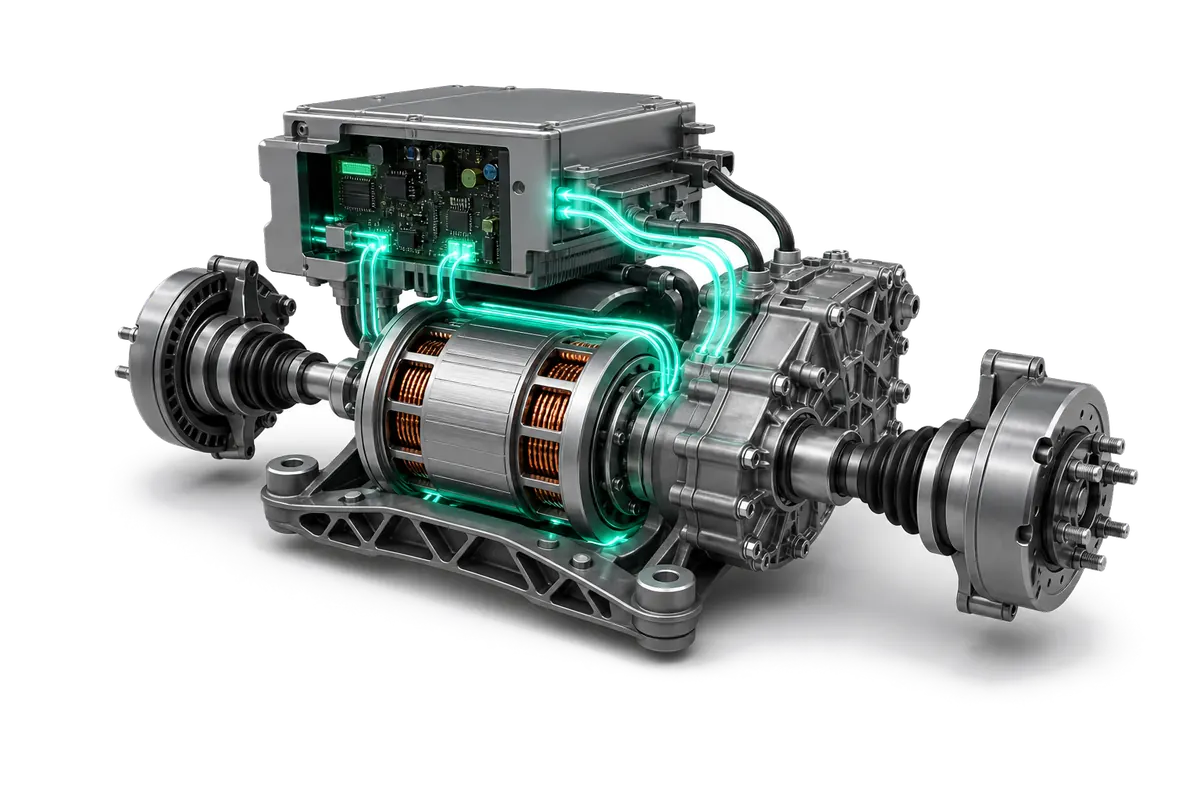
EV drivetrains are still constrained by heat, material risk, and control complexity
High-volume electrification rewards every watt saved and every gram removed. FluxWorx is seeking partners to test whether magnetic steering can contribute to practical drivetrain improvements.
Thermal derating
Motor and inverter heat can limit sustained torque and duty-cycle performance.
Torque ripple and NVH
Low-speed smoothness, cabin feel, and acoustic quality remain differentiators.
Rare-earth exposure
Permanent magnet supply chains create cost, resilience, and sourcing pressure.
Fast transients
Regeneration, traction events, and vehicle controls demand stable magnetic behaviour.
Differential Flux Steering proposes an actively controlled magnetic degree of freedom that may be evaluated between power electronics and the traction machine. The goal is to test whether magnetic condition shaping can improve drivetrain behaviour in a partner-specific design.

Efficiency hypothesis
Loss reduction would need to be proven against a partner reference motor and inverter.
Smoother torque control
Ripple, vibration, and transient behaviour are target evaluation areas.
Integration diligence
System benefit depends on machine topology, controls, packaging, and qualification testing.
Drive-cycle efficiency
Measured against real operating points.
Thermal headroom
Sustained torque and derating comparison.
NVH improvement
Noise and vibration traces under load.
Magnet-light pathways
Potential rare-earth-reduction exploration.
Regeneration behaviour
Partner-specific transient testing.
Applications with demanding duty cycles and supply-chain pressure
Fleet and heavy-duty platforms often expose drivetrain weaknesses earlier than passenger-car use cases. These areas may offer practical partner evaluation pathways.
Fleet EVs
Vans, buses, and delivery vehicles with repeatable routes.
Off-road platforms
High torque, dust, heat, vibration, and long service life.
Commercial traction
Duty cycles where thermal headroom and uptime have measurable value.
Research drivetrains
Controlled testbeds for topology and control assessment.
Drivetrain evaluation pathway
Qualified partners can request technical discussions, International Patent Pending review, modelling material, and a proposed framework for assessing drivetrain fit under NDA.
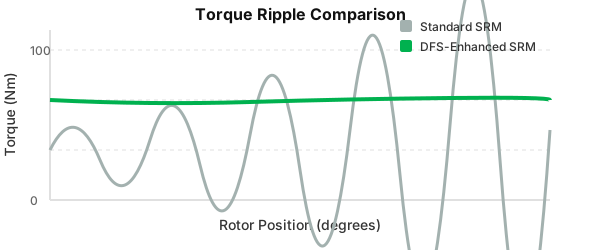
The goal is evidence-led licensing and technical diligence.
EV Drivetrain FAQs
Is FluxWorx offering an EV drivetrain product?
No. FluxWorx is seeking expressions of interest from partners that may wish to evaluate its International Patent Pending magnetic control IP for future drivetrain applications.
Where could Differential Flux Steering fit in an EV drivetrain?
Potential evaluation areas include traction motor magnetic control, inverter-to-machine interaction, torque ripple mitigation, thermal behaviour, and rare-earth-reduction pathways. All outcomes require partner validation.
Could FluxWorx technology reduce EV torque ripple or NVH?
Torque ripple, vibration, and acoustic behaviour are target areas for partner testing. FluxWorx does not claim validated EV drivetrain performance until a partner-specific motor, inverter, and control implementation has been measured.
Could EV drivetrain partners evaluate rare-earth-reduction pathways?
Yes. FluxWorx is interested in partner-led assessment of magnet-light or rare-earth-reduction pathways where magnetic control could be compared against a reference drivetrain design.